Ceasefires and continued battles: A world still at war in 2025
The year 2025 unfolded as a period of fragile truces and active conflicts across the world, with wars and border tensions persisting in regions from South Asia and the Middle East to Eastern Europe and Africa, highlighting the continued challenge of achieving lasting global peace.
Ishita Pandit | New Delhi | December 26, 2025 5:36 pm
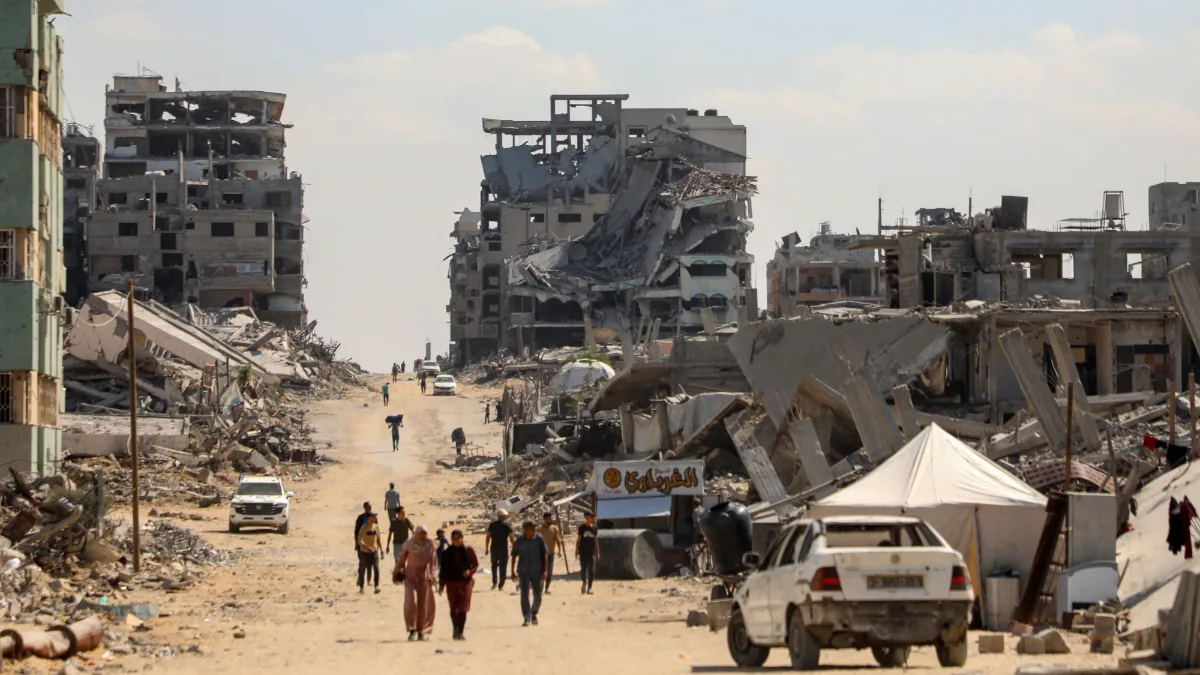
Buildings destroyed in Gaza city (photo: IANS)
2025 was a crucial year for international peace and security. The world remained trapped between fragile ceasefires and ongoing conflicts. Below are the backdrops and current status of major conflicts that we witnessed in 2025.
India-Pakistan Military Conflict
India and Pakistan nearly came close to a full-scale war following the targeted terror attack in the Baisaran Valley of Pahalgam in April, that killed more than 26 people, most of them tourists. According to Indian security agencies, the attack involved operatives linked to the Pakistan-based terrorist organisation Lashkar-e-Taiba (LeT). In response, India launched Operation Sindoor on May 7 carrying out a coordinated military strikes targeting nine terror infrastructure sites in Pakistan. New Delhi described the decision as a decisive yet measured action, underscoring India’s stance on zero tolerance towards terrorism. Over the next few days, the two nuclear-armed nations remained engaged in a military conflict before an unexpected ceasefire brought the hostilities to a pause. India has maintained since then that Operation Sindoor remains active and Pakistan would see an immediate response in the wake a fresh terror attack.
Advertisement
Meanwhile, US President Donald Trump claimed credit for the ceasefire between India and Pakistan and has repeated the claim numerous times, notwithstanding the fact that New Delhi has denied the same, maintaining that the matter remained bilateral and rooted in the country’s security concerns.
Advertisement
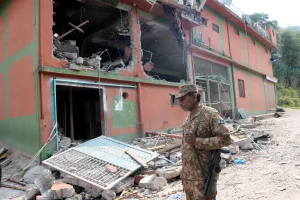
A Pakistani soldier stands in front of damaged infrastructure after it was hit by an Indian strike (photo: ANI)
Russia’s full-scale invasion of Ukraine
1991 saw the fall of the Soviet Union making Ukraine independent for the very first time and ending the decades-long rule of Russia over it. This loss deeply affected Russia politically (weakening its control over former Soviet states), militarily and strategically (limiting its nuclear reach and buffer zone against NATO) as well as geopolitically (diminishing its image as a global superpower). Putin believes that Ukraine is the soul of Russia and that it should be reunited with it as one country given their colonial history.
Against this backdrop, Russia’s war in Ukraine began with the annexation of Crimea in 2014 that escalated into a full-scale invasion in February 2022. The war remains unabated through 2025 with no ceasefire in sight. Heavy fighting continued in the eastern and southern parts of Ukraine accompanied by frequent missile and drone attacks on both military as well as civilian infrastructure. Despite multiple diplomatic initiatives and peace proposals, battle lines remained contested, indicating a prolonged war of attrition.
The role of US President Donald Trump remained ambiguous and controversial during the course of the war as he combined aiding Ukraine in times of need while advocating improved relations with Russia. Thereby sparking debates globally over Washington’s long-term strategy in the conflict.
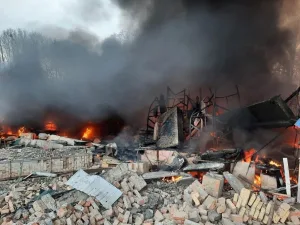
Russia-Ukraine war outcomes (photo: IANS)
Israel-Gaza War
The year 2025 witnessed the continuation of the Israel-Gaza conflict, which started following a surprise terror attack by Hamas in southern Israel on 07 October 2023 that killed hundreds of civilians and soldiers, while several others were taken hostage. In response, Israel declared war on the Gaza Strip the same day, aiming to eliminate Hamas, a Palestinian militant group governing Gaza. Israel launched a massive military offensive with intense airstrikes, ground operations and widespread destruction, causing severe humanitarian distress, killing tens of thousands of Palestinians and leaving many millions displaced. The long-standing Israel-Palestine conflict marked by disputes over land, security, occupation and Palestinian statehood are the root causes of the ongoing war.
By late 2025, a fragile ceasefire was in place that drastically reduced attacks and operation, though reports of localized violence and violations continued. US President Donald Trump also initiated diplomatic efforts among others, to secure a peace framework, but durable solutions remained elusive. The year thus concluded with wary peace in Gaza leaving the region under a tense truce with ongoing humanitarian crises.
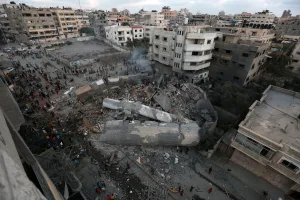
The rubble of a building following an Israeli airstrike in Gaza City. (photo: IANS)
Sudan’s Civil War
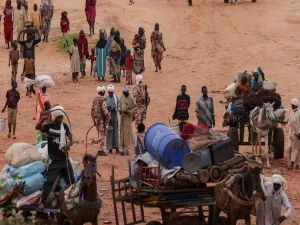
The largest and fastest-growing displacement crisis globally is being observed in Sudan, following the outbreak of a civil war in April 2023, as a fight for power and dominance erupted between the Sudanese Armed Forces (SAF) headed by Gen Abdel Fattah al-Burhan and the paramilitary Rapid Support Forces (RSF) headed by Gen Mohamed Hamdan Dagalo (Hemedti). Formerly allies, Gen Burhan and Gen Hemedti now stand on two opposite sides following the removal of Omar al-Bashir, the long-serving President who came to power in a coup in 1989. The internal war between the two factions is driven by disagreements over Sudan’s transition to civilian rule, the integration of 100,000 RSF into the army and both leaders’ desire to stay in power. As of late 2025, with no lasting ceasefire or peace agreement in sight, the war is still ongoing, displacing and destroying the lives of millions.
The largest and fastest-growing displacement crisis in Sudan (photo: Reuters)
Thailand-Cambodia Border war
A long-running territorial dispute between Thailand and Cambodia – rooted in early 1900s Franco-Siamese border treaties – escalated into serious armed clashes along the frontier in 2025. While Siam initially accepted the maps, the later Thai governments argued that the natural watershed line of Dângrêk Mountains should define the boundary. The disagreement further intensified by the presence of the Hindu temple Preah Vihear which sits on the border in such a way that both countries now wish to claim ownership of that.
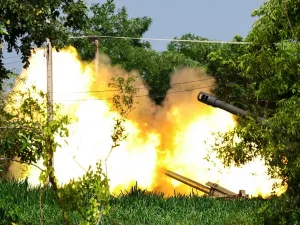
In July 2025, a Thai soldier stepped on a landmine in disputed frontier which triggered renewed clashes involving artillery, airstrikes and rocket exchanges causing military and civilian casualties and displacing tens of thousands. A peace deal was also brokered in late 2025 by US President Donald Trump which briefly held but ultimately failed as the two countries still remain at war and the border remains volatile.
Air strike along the Thailand-Cambodia border (photo: Reuters)
Afghanistan-Pakistan border clashes
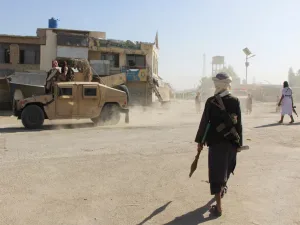
Tensions along the Afghanistan-Pakistan border remained high through 2025 following a series of cross-border attacks linked to the banned militant group, Tehreek-e-Taliban Pakistan (TTP). On 21 December 2024, TTP militants launched an attack on a Pakistani army post from Afghan territory, killing several Pakistani soldiers. The disputed Durand Line, a colonial-era boundary drawn by the British in 1893 and never formally recognized by Afghanistan, has seen repeated cross-border militant activities ever since the Taliban returned to power in Kabul in 2021.
While Pakistan accuses the Taliban government of sheltering such militants to carry out attacks from Afghan soil, the Taliban-led government not only refutes these claims but also blames the government of Islamabad for its poor security measures. At present, despite periodic contacts and calls for dialogue, no concrete peace framework is in place, keeping the tensions high between the two nations.
Afghanistan-Pakistan border clashes (Reuters)
PKK insurgency with Turkey
The drawn-out conflict between Turkey and the Kurdistan Workers’ Party (PKK) dates back to 1984, when they took up arms to fight for Kurdish rights and autonomy, demanding a separate homeland. PKK has been labelled as a terrorist organisation by Turkey, the United States and the European Union. Consecutive years saw the conflict turn violent with attacks by the PKK and fierce military responses by Turkey, causing the deaths of tens of thousands of people. While multiple ceasefires were brokered over the years, most collapsed amid renewed violence.
In 2025, signs of possible shift emerged after Abdullah Öcalan, the PKK’s jailed leader, asked the group to lay down arms, choosing political dialogue and solutions over violence. Respecting their leader’s word, the group has begun disarming in northern Iraq, declaring a ceasefire. While the process is still underway, talks and negotiations are ongoing with no major or direct role of international mediators who view this largely as a matter of Turkish politics and Kurdish leadership decisions.
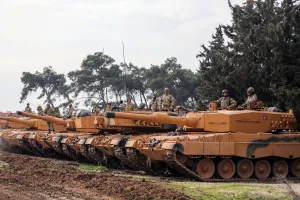
Turkish soldiers prepare their armored vehicles near the Syrian-Turkish border (photo: IANS)
As can be seen, the world in 2025 increasingly turned to military measure as their first response to any political or security challenges with dialogues and diplomacy taking a back seat, even as repeated escalations and historical lessons have proved that lasting peace cannot be achieved through arms alone.
BRICS nations on Friday deplored unilateral economic sanctions, reaffirming that the bloc does not intend to impose or support sanctions contrary to international law and unauthorized by the UN Security Council.
Iran's Permanent Representative to the United Nations (UN), Amir-Saeid Iravani, has sharply criticised the Bahrain-US efforts to rally support for a draft UN resolution on the Strait of Hormuz, calling the campaign "ridiculous, misleading, and deceptive", according to Iranian state media Press TV.
The rhetoric surrounding the Iran conflict may still speak the language of ceasefires and negotiations, but the strategic reality points elsewhere. What is unfolding now is not the winding down of a war.